Retire Rich, Retire Early: The Passive Income Blueprint
Introduction: Retiring Rich and Early
Imagine waking up each morning with the freedom to choose how you spend your day—traveling the world, pursuing hobbies, or simply relaxing—without worrying about money. This is the promise of passive income streams, the key to unlocking early retirement strategies that lead to financial independence. In Retire Rich, Retire Early: The Passive Income Blueprint, you’ll discover a step-by-step financial independence guide to building automated income systems that work for you, even while you sleep.
This book isn’t about get-rich-quick schemes or endless hustling. It’s a practical wealth-building blueprint designed for anyone, from beginners to seasoned investors, who wants to retire rich and retire early. Through inspiring stories of real people who’ve achieved financial freedom and actionable strategies, you’ll learn how to create sustainable passive income streams that fund your dream lifestyle.
Chapter 1: Your Financial Freedom Blueprint
Defining Your Retirement Vision
Financial independence starts with a clear vision. What does “retiring rich” mean to you? Is it traveling the world, spending time with family, or pursuing passion projects? To build your financial independence guide, calculate your “freedom number”—the annual passive income needed to cover your expenses.
- Action Step: Use a budgeting app to track your monthly expenses. Multiply by 12 to estimate your annual needs, then add 20% for unexpected costs. This is your target passive income goal.
- Example: If your annual expenses are $40,000, aim for $48,000 in passive income to retire comfortably.
Setting Realistic Goals
Break your early retirement strategies into short-term (1–3 years), mid-term (3–7 years), and long-term (7+ years) goals. Start small—$500/month in passive income can grow into thousands with time and reinvestment.
- Action Step: Write down one passive income goal for the next 12 months (e.g., “Earn $200/month from dividend stocks”). Review and adjust quarterly.
Success Story: From 9-to-5 to Financial Freedom
Meet Sarah, a 35-year-old teacher who built $3,000/month in passive income through rental properties and online courses in just five years. By following a clear wealth-building blueprint, she retired early and now travels full-time. Her story shows that with dedication, anyone can achieve financial independence.
Chapter 2: Starting with Passive Income Basics
Why Passive Income Matters
Passive income streams require upfront effort but minimal maintenance, freeing you from the 9-to-5 grind. Unlike active income, which stops when you stop working, passive income flows consistently, making it the cornerstone of early retirement strategies.
Low-Risk Options for Beginners
You don’t need millions to start. Here are two beginner-friendly passive income streams:
- Dividend Stocks: Invest in companies that pay regular dividends. Start with as little as $100 using platforms like Robinhood or M1 Finance.
- Example: A $10,000 investment in a stock yielding 4% annually generates $400/year in passive income.
- Real Estate Crowdfunding: Platforms like Fundrise allow you to invest in properties with as little as $10, earning returns without managing tenants.
- Example: A $1,000 investment at 8% annual return yields $80/year.
- Action Step: Open an account on a low-cost investing platform and allocate $100 to a dividend ETF or crowdfunding platform. Reinvest earnings to compound growth.
Avoiding Common Mistakes
Beginners often expect instant results. Building automated income systems takes time. Focus on consistency and diversification to minimize risks.
Chapter 3: Real Estate Wealth Creation
Why Real Estate?
Real estate is a proven wealth-building blueprint for passive income. Rental properties generate steady cash flow, and property values often appreciate over time, boosting your net worth.
Getting Started with Rentals
You don’t need to be a millionaire to own rental properties. Here’s how to start:
- House Hacking: Buy a duplex, live in one unit, and rent out the other. Your tenants cover the mortgage, creating a near-passive income stream.
- Example: A $1,500/month mortgage is paid by tenants, saving you $18,000/year.
- Single-Family Rentals: Purchase a small home in a growing market. Use a property manager to handle tenants, making it truly passive.
- Action Step: Research affordable markets using sites like Zillow. Aim for properties where rent covers 1% of the purchase price monthly (e.g., $100,000 home = $1,000/month rent).
Using Leverage
Take advantage of low-interest mortgages to buy properties with minimal upfront cash. A 20% down payment on a $200,000 property ($40,000) can generate $1,200/month in rent, netting $800 after expenses.
Success Story: From One Property to Financial Freedom
John, a 40-year-old engineer, bought his first rental property with a $30,000 down payment. Five years later, he owns three properties generating $4,000/month in passive income, allowing him to retire early. His story proves real estate’s power in a financial independence guide.
Chapter 4: Online Income Opportunities
The Digital Income Revolution
The internet has made passive income streams more accessible than ever. With minimal startup costs, you can create scalable businesses that run on autopilot.
Building a Blog for Ad Revenue
A blog in a niche like personal finance or travel can generate income through ads and affiliate marketing.
- Step 1: Start a blog using WordPress or Squarespace for under $100/year.
- Step 2: Write 20–30 high-quality posts optimized for low-competition keywords like “best passive income ideas.”
- Step 3: Monetize with Google AdSense or affiliate programs like Amazon Associates.
- Example: A blog with 50,000 monthly visitors can earn $500–$1,000/month in ad revenue.
Creating Scalable Digital Products
Digital products like eBooks or online courses require upfront work but generate automated income systems over time.
- Step 1: Identify a problem you can solve (e.g., “How to Budget for Beginners”).
- Step 2: Create a course using platforms like Teachable or Gumroad.
- Step 3: Market through social media or email lists.
- Example: A $47 course sold 100 times/month generates $4,700 in passive income.
- Action Step: Write one blog post or create a short eBook this month. List it on Gumroad for $10 to test the market.
Chapter 5: Investing for Passive Cash Flow
Building a Dividend Portfolio
Dividend stocks provide reliable passive income streams without selling assets. Focus on “dividend aristocrats”—companies with 25+ years of consistent dividend increases.
- Action Step: Invest in ETFs like Vanguard Dividend Appreciation ETF (VIG) for diversification. A $10,000 investment at 3% yield generates $300/year.
Bonds and ETFs for Stability
Bonds and exchange-traded funds (ETFs) offer lower risk than stocks. Municipal bonds or bond ETFs like iShares Core U.S. Aggregate Bond ETF (AGG) provide steady income.
- Example: A $20,000 investment in a bond ETF yielding 2.5% generates $500/year.
Using Robo-Advisors
Platforms like Betterment automate investing and rebalancing your portfolio for optimal returns with minimal effort.
- Action Step: Open a robo-advisor account and set up automatic monthly contributions of $50.
Chapter 6: Automating Your Income Streams
Why Automation Matters
The goal of automated income systems is to minimize your time commitment. Automation ensures your passive income streams run smoothly while you focus on scaling or enjoying life.
Tools for Hands-Off Management
- Real Estate: Use property management software like Buildium to handle tenant payments and maintenance requests.
- Online Businesses: Automate email marketing with tools like Mailchimp to nurture leads and drive sales.
- Investments: Set up automatic dividend reinvestment plans (DRIPs) through brokers like Fidelity.
Hiring Teams
Outsource tasks like property maintenance or blog content creation to virtual assistants on platforms like Upwork. A $200/month assistant can save you 20 hours of work, making your income truly passive.
- Action Step: Identify one repetitive task (e.g., responding to tenant emails) and outsource it this month.

Chapter 7: Scaling Your Wealth
Adding New Income Streams
Diversify your passive income streams to reduce risk. If you have one rental property, add a second. If you run a blog, launch a YouTube channel in the same niche.
- Action Step: Brainstorm one new income stream to explore in the next six months.
Reinvesting Profits
Use income from one stream to fund another. For example, use rental income to buy dividend stocks or fund a new digital product.
- Example: $1,000/month from rentals reinvested into a 5% dividend stock generates an additional $600/year.
Success Story: Scaling to Millions
Lisa, a former nurse, started with a single blog, earning $200/month. She reinvested profits into a course, then used course revenue to buy two rental properties. Today, her passive income streams generate $10,000/month, and she retired at 42.

Chapter 8: Protecting Your Financial Future
Tax Strategies for Passive Income
Minimize taxes to maximize your wealth-building blueprint:
- Real Estate: Use depreciation to reduce taxable income from rentals.
- Investments: Hold stocks in tax-advantaged accounts like IRAs to defer taxes.
- Action Step: Consult a tax professional to identify one tax-saving strategy for your income streams.
Legal Protections
Protect your assets by forming an LLC for real estate or online businesses. This shields your personal finances from lawsuits.
- Example: An LLC for a rental property limits liability if a tenant sues.
Insurance
Purchase umbrella insurance to cover unexpected losses in real estate or investments. A $1 million policy costs as little as $200/year.

Chapter 9: Living the Passive Income Life
Designing Your Dream Retirement
Early retirement isn’t just about money—it’s about freedom. Use your passive income streams to fund travel, hobbies, or time with loved ones.
- Action Step: Write down three activities you’d pursue in retirement. Estimate their costs and adjust your income goals.
Finding Purpose Beyond Wealth
Financial independence allows you to explore passions or give back. Start a blog to share your journey, mentor others, or volunteer in your community.
Success Story: A Life of Freedom
Mark, a 38-year-old former IT manager, built $5,000/month in passive income through rentals and dividends. Now, he spends his days hiking and teaching financial literacy to young adults, proving that early retirement is about living on your terms.

Chapter 10: Your Next Steps to Financial Freedom
Creating Your Action Plan
Follow this 12-month financial independence guide to start your journey:
- Months 1–3: Calculate your freedom number and open an investment account.
- Months 4–6: Invest $500 in a dividend ETF or crowdfunding platform.
- Months 7–9: Research and buy your first rental property or launch a blog.
- Months 10–12: Automate one income stream and reinvest profits.
Staying Motivated
Track your progress with a journal or app. Celebrate small wins, like your first $100 in passive income, to stay motivated.
Your Passive Income Legacy
Building automated income systems isn’t just for you—it’s for your family, community, and future generations. Share your knowledge, inspire others, and live the life you’ve always dreamed of.

Conclusion: Your Journey to Retiring Rich
The wealth-building blueprint in this book is your roadmap to financial freedom. By starting small, leveraging passive income streams, and staying consistent, you can retire rich and early. Take the first step today—your future self will thank you.
Ready to begin? Choose one action from this book and implement it this week. Whether it’s opening an investment account or writing your first blog post, every step brings you closer to the life of your dreams.

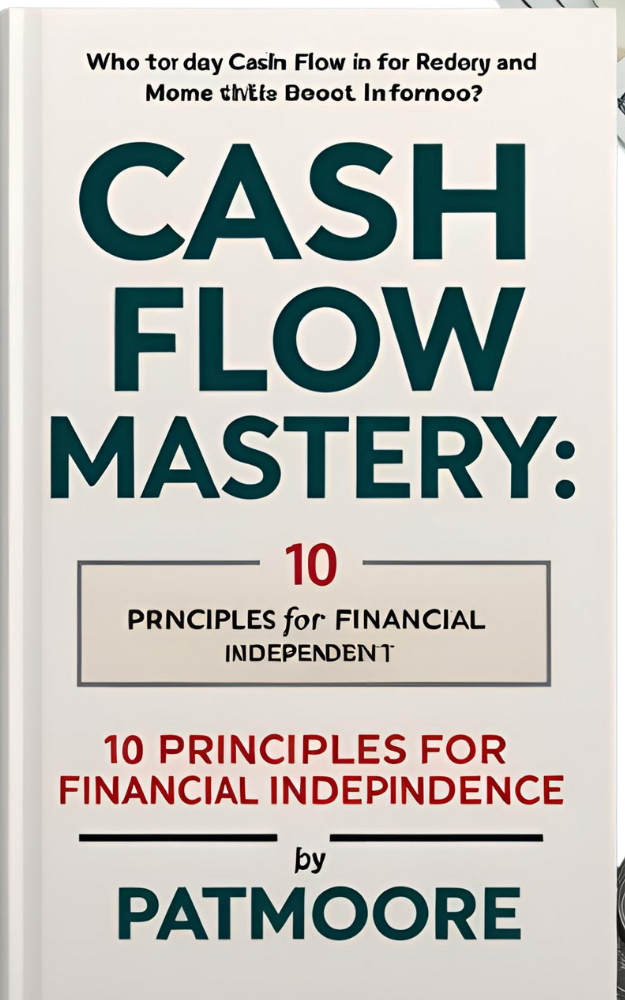
Cash Flow Mastery: 10 Principles for Financial Independence
Introduction: Why Cash Flow Matters
Imagine a life where money works for you, not the other way around. That’s the magic of passive wealth strategies—a system where cash flow becomes your ticket to freedom. In Cash Flow Mastery: 10 Principles for Financial Independence, you’ll embark on a financial independence journey that transforms your financial future. This book unveils cash flow secrets that have empowered everyday people to break free from the 9-to-5 grind and live on their terms.
Whether you’re a beginner dreaming of financial security or an investor ready to scale, this wealth-building roadmap offers actionable steps and inspiring stories. Let’s dive into the principles that will guide you to automated income ideas and a life of passive wealth.
Chapter 1: Set Clear Financial Goals
Defining Your Passive Wealth Vision
Financial independence starts with a vision. What does freedom look like for you? Traveling the world, spending time with family, or pursuing a passion? Your first step on this financial independence journey is to calculate your “freedom number”—the annual passive income needed to cover your expenses.
- Action Step: Track your monthly spending for 30 days using a budgeting app. Multiply by 12, then add 25% for a safety buffer. For example, if you spend $3,000/month, aim for $45,000/year in passive income.
- Motivation: Meet James, a 42-year-old teacher who set a $40,000/year goal. Within five years, his rental properties and online courses hit that mark, letting him retire early.
Setting Achievable Milestones
Break your goal into bite-sized steps. Aim for $500/month in passive income within year one, then scale to $1,000 by year three. This wealth-building roadmap keeps you motivated and on track.
- Action Step: Write down one financial milestone for the next 12 months (e.g., “Save $5,000 for my first investment”). Review it monthly.
Chapter 2: Develop an Investor Mindset
Thinking Like an Owner
The shift from employee to investor is a game-changer. Instead of trading time for money, focus on assets that generate cash flow secrets. This mindset opens doors to passive wealth strategies like real estate and stocks.
- Insight: Ask yourself, “How can this asset pay me over time?” A rental property pays rent; a blog pays ad revenue.
- Motivation: Sarah, a single mom, switched her mindset at 38. By investing in dividend stocks, she now earns $2,000/month passively.
Overcoming Fear of Failure
Fear can stall your financial independence journey. Start small—invest $100 in a dividend stock or a crowdfunding platform—to build confidence. Every step forward is a victory.
- Action Step: Identify one fear (e.g., “I might lose money”) and research one way to mitigate it (e.g., diversify investments).
Chapter 3: Explore Multiple Income Sources
Combining Powerhouses of Passive Wealth

Relying on one income stream is risky. Blend passive wealth strategies like real estate, stocks, and digital assets. A rental property might yield $500/month, while a blog adds $300 from affiliates.
- Examples:
- Real Estate: Buy a duplex and rent both units.
- Stocks: Invest in an ETF like VTI for dividends.
- Digital: Create an eBook on “automated income ideas” and sell it on Amazon.
- Action Step: List three income sources you’re interested in. Research one this week.
Reducing Reliance on a Single Stream
Diversification stabilizes your wealth-building roadmap. If one stream dips, others carry you. Balance high-risk (e.g., real estate flips) with low-risk (e.g., bonds) options.
- Motivation: Tom, a 50-year-old accountant, lost his job but thrived thanks to diversified income from rentals and online courses.
Chapter 4: Leverage Real Estate Opportunities
Rental Income Basics
Real estate is a cornerstone of cash flow secrets. A single-family rental can generate $800/month after expenses, building your passive wealth strategies over time.
- Getting Started: Look for properties where rent is 1% of the purchase price (e.g., $100,000 home = $1,000/month rent). Use sites like Zillow.
- Action Step: Contact a local real estate agent to explore one property this month.
Using Leverage Wisely
A 20% down payment ($20,000 on a $100,000 property) can yield $9,600/year in profit with $800/month rent. Leverage amplifies your financial independence journey.
- Motivation: Lisa used a $15,000 down payment to buy her first rental, now earning $3,000/month across three properties.
Chapter 5: Create Scalable Online Revenue
Building Digital Assets

The internet offers automated income ideas like blogs or online courses. A blog on “passive wealth strategies” can earn $500/month with ads, while a $50 course sold 50 times/month nets $2,500.
- Steps:
- Start a blog with WordPress ($50/year).
- Write 10 posts on low-competition keywords.
- Monetize with Google AdSense.
- Action Step: Write your first blog post or outline a course topic this week.
Automating Digital Sales
Use platforms like Teachable to automate course sales. Set it up once, and it sells 24/7, fueling your wealth-building roadmap.
- Motivation: Mark, a 35-year-old marketer, built a $1,000/month course business in two years, working just 5 hours/week.
Chapter 6: Maximize Investment Returns
Choosing High-Yield Dividend Stocks
Dividend stocks are a reliable cash flow secrets source. Invest $10,000 in a 4% yield stock (e.g., Coca-Cola) for $400/year, reinvesting for growth.
- Action Step: Open a brokerage account (e.g., Fidelity) and invest $100 in a dividend ETF like VIG.
Compound Growth Strategies
Reinvest dividends to compound your passive wealth strategies. A $5,000 investment at 5% annual growth becomes $8,144 in 10 years.
- Motivation: Emma, a 45-year-old nurse, turned $2,000 into $10,000 over 15 years with reinvestment.
Chapter 7: Build a Safety Net
Emergency Funds and Insurance
A safety net protects your financial independence journey. Save 3–6 months of expenses ($9,000–$18,000 if you spend $3,000/month) and get umbrella insurance for $200/year.
- Action Step: Set up an automatic transfer of $50/month to a high-yield savings account.
Safeguarding Against Losses
Diversify to avoid relying on one asset. If a rental underperforms, stocks or online income can offset it.
- Motivation: John weathered a market crash thanks to his diversified wealth-building roadmap.
Chapter 8: Streamline Operations
Tools for Managing Cash Flow
Use Buildium for rental management or Mailchimp for email marketing to keep automated income ideas running smoothly.
- Action Step: Download one free tool (e.g., Mint for budgeting) and explore its features.
Delegating Tasks
Hire a virtual assistant ($5–$10/hour) to handle tenant calls or blog updates, freeing you for bigger passive wealth strategies.
- Motivation: Rachel scaled her rental business by outsourcing, now earning $4,000/month passively.
Chapter 9: Expand Your Portfolio
Adding New Income Streams
Once you master one stream, add another. A successful blog can fund a second rental property, expanding your wealth-building roadmap.
- Action Step: Plan to launch a new income stream (e.g., affiliate marketing) in six months.
Reinvesting for Growth
Use profits to buy more assets. $1,000/month from rentals can buy dividend stocks, doubling your cash flow secrets over time.
- Motivation: Paul reinvested $10,000 into stocks, growing his passive income to $15,000/year.
Chapter 10: Enjoy Financial Freedom
Crafting Your Dream Lifestyle

With passive wealth strategies in place, design your life. Travel, learn a skill, or volunteer—your choice matters.
- Action Step: List three activities you’d enjoy in retirement. Estimate costs to refine your freedom number.
Sharing Your Success
Mentor others on their financial independence journey. Write a blog or host a workshop to give back.
- Motivation: Maria, who retired at 50, now teaches financial literacy, inspiring hundreds.
Conclusion: Your Path to Passive Wealth
Cash Flow Mastery: 10 Principles for Financial Independence is your wealth-building roadmap to a life of freedom. From setting goals to scaling income, each principle builds on the last, turning cash flow secrets into reality. Start small—invest $100 today, write a blog post, or research a rental, and watch your automated income ideas grow.
Ready to begin? Pick one action from this book and do it this week. Your financial independence journey starts now—every step brings you closer to passive wealth.

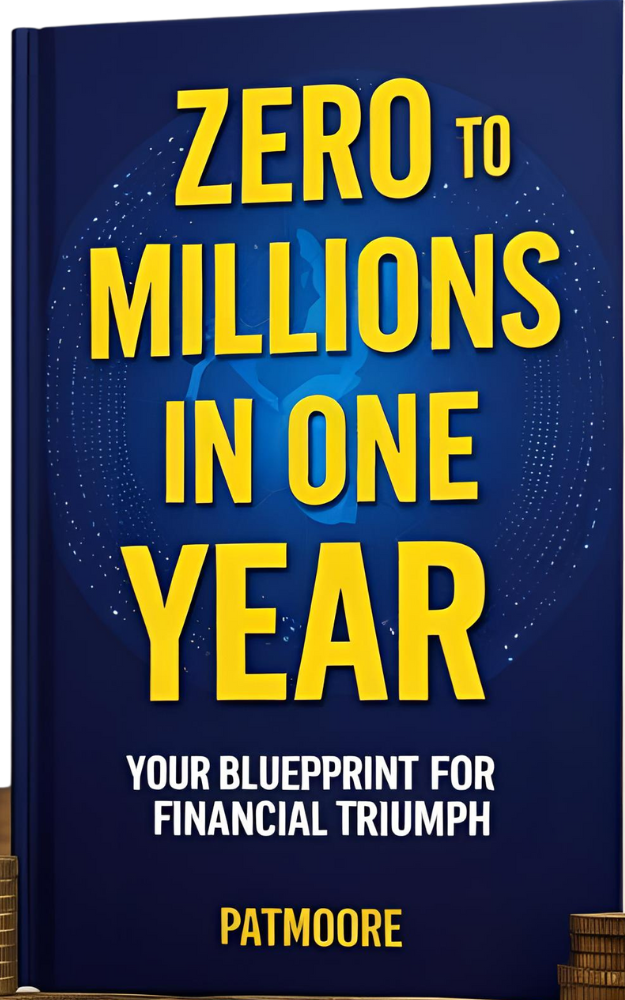
Zero to Millions in One Year: Your Blueprint for Financial Triumph
Introduction: From Zero to Millions in 12 Months
What if you could transform your financial life in just one year? Imagine going from broke to banking a million dollars, all while mastering fast wealth strategies that work for you. Zero to Millions in One Year: Your Blueprint for Financial Triumph is your million-dollar roadmap to achieving this dream. This book unveils quick income secrets that have propelled ordinary people to extraordinary success, proving that a financial triumph guide is within your reach.
In the following chapters, you’ll discover a step-by-step plan to assess your starting point, set audacious goals, and leverage wealth acceleration tactics like high-impact skills, scalable businesses, and smart investments. With real-life stories and actionable steps, this guide will empower you to turn your financial dreams into reality. Let’s embark on this rapid wealth journey together—starting today.
Chapter 1: Assess Your Starting Point
Evaluating Your Current Finances and Skills
Every rapid wealth journey begins with a clear understanding of where you stand. Take a hard look at your finances: How much money do you have saved? What debts are you carrying? Next, assess your skills. Are you a natural salesperson, a tech enthusiast, or a creative thinker? These are the building blocks of your million-dollar roadmap.
- Action Step: Grab a notebook or use a spreadsheet. List your current savings, monthly income, and any debts. Then, jot down three skills you’re good at or willing to learn. For example, if you’re organized, you might excel in project management—a high-demand skill.
- Real-Life Inspiration: Meet Alex, a 29-year-old barista with $500 in savings and $5,000 in credit card debt. By assessing his knack for connecting with people, he turned to sales—a skill that launched his financial triumph guide.
Identifying Untapped Opportunities
Your current situation hides golden opportunities. Maybe you have a spare room to rent, a hobby that could become a side hustle, or access to a network you haven’t tapped. These are the quick income secrets that can kickstart your wealth.
- Action Step: Spend 30 minutes brainstorming three untapped opportunities. Could you sell handmade crafts online, offer freelance services, or invest in a low-cost stock? Research one idea this week.
- Motivation: Sarah, a stay-at-home mom, noticed her baking skills were a hit at local events. She started an online bakery, earning $10,000 in her first three months—proof that small starts lead to big wins.
Chapter 2: Set a Million-Dollar Goal
Breaking Down the $1 Million Target
A million dollars in one year sounds daunting, but it’s achievable with a plan. Divide it into manageable chunks: $83,333 per month or $2,777 per day. This million-dollar roadmap turns a big goal into daily actions.
- Strategy: Focus on high-return activities. If you earn $100/hour freelancing and work 10 hours/day, that’s $1,000/day—nearly a third of your daily target. Stack multiple streams to hit the mark.
- Action Step: Write down your $1 million goal and break it into monthly and daily targets. Post it where you’ll see it daily.
Creating a 12-Month Timeline
Structure your year with milestones. Month 1: Learn a skill and start a side hustle. Month 6: Scale to $40,000/month. Month 12: Hit $1 million. This financial triumph guide keeps you on track.
- Action Step: Create a 12-month calendar. Assign one major goal per month (e.g., “Launch business by Month 3”). Review weekly.
- Real-Life Inspiration: Mark, a 35-year-old mechanic, set a timeline to learn digital marketing. By Month 9, his online ads business generated $900,000, pushing him to his million-dollar mark by year-end.
Chapter 3: Master High-Impact Skills
Learning Sales, Marketing, or Trading
High-impact skills are your ticket to wealth acceleration tactics. Sales can net you commissions fast; marketing drives business growth; trading offers quick investment gains. Pick one that aligns with your strengths.
- How to Start: Enroll in a $20 online course (e.g., Udemy) or watch YouTube tutorials. Dedicate 2 hours/day to learning. For sales, practice pitching to friends; for marketing, build a small ad campaign.
- Action Step: Choose one skill this week. Spend $20–$50 on a resource and commit to 10 hours of practice.
Accelerating Skill Acquisition
Speed is key on your rapid wealth journey. Use the 80/20 rule—focus on the 20% of skills that yield 80% of results. Join a mastermind group or hire a coach to fast-track your learning.
- Motivation: Lisa, a 42-year-old teacher, learned SEO in 6 weeks. Her blog earned $50,000 in its first year, a stepping stone to her million.
- Action Step: Find a mentor or community (e.g., LinkedIn groups) and ask one question to accelerate your learning.

Chapter 4: Launch a Scalable Business
Starting with E-commerce or Consulting
A scalable business is the backbone of fast wealth strategies. E-commerce (e.g., Amazon FBA) lets you sell products globally with minimal upfront cost. Consulting leverages your skills for high hourly rates ($100–$500).
- How to Start: For e-commerce, source a product (e.g., $500 for inventory) and list it on Amazon. For consulting, create a profile on Upwork and pitch to 10 clients.
- Action Step: Pick e-commerce or consulting. Invest $100–$500 to start and launch within 30 days.
Scaling Quickly with Minimal Capital
Use digital tools to scale fast. Automate with software (e.g., Shopify for e-commerce, Calendly for consulting) and reinvest profits. Aim for $10,000/month by Month 3.
- Real-Life Inspiration: John, a 30-year-old with $1,000, started a dropshipping store. By reinvesting, he scaled to $200,000/month by Month 6.
- Action Step: Set a scaling goal (e.g., “Double revenue every 2 months”) and track progress weekly.
Chapter 5: Leverage High-Risk, High-Reward Investments
Exploring Options Trading or Crypto
High-risk investments can turbocharge your million-dollar roadmap. Options trading can yield 100% returns in weeks; crypto booms (e.g., Bitcoin in 2020) can multiply your money. Start small—$500–$1,000.
- How to Start: Open a brokerage account (e.g., Robinhood) and take a free course on options or crypto basics. Practice with a demo account first.
- Action Step: Invest $500 in one high-risk asset this month. Set a stop-loss to limit losses to 10%.
Managing Risks Effectively
Risk management is crucial for wealth acceleration tactics. Never invest more than 5% of your portfolio in one asset. Diversify across stocks, crypto, and real estate.
- Motivation: Emma, a 28-year-old, turned $2,000 into $50,000 with crypto in 6 months by diversifying and using stop-losses.
- Action Step: Create a risk plan (e.g., “Cap losses at $50 per trade”) and stick to it.
Chapter 6: Build a High-Performing Network
Connecting with Mentors and Investors
Your network is your net worth. Mentors provide quick income secrets; investors fund your growth. Attend free webinars or local meetups to connect.
- How to Start: Send 5 personalized LinkedIn messages to successful people in your field. Offer value (e.g., “I’d love your input on my business idea”).
- Action Step: Attend one networking event or join an online group this month.
Leveraging Relationships for Growth
Ask mentors for advice or introductions to investors. A $10,000 investment from a contact can double your business’s reach.
- Real-Life Inspiration: Tom, a 40-year-old, got a $50,000 investment from a mentor he met at a seminar, scaling his consulting to $1 million.
- Action Step: Follow up with one contact and ask for one specific help (e.g., “Can you introduce me to an investor?”).

Chapter 7: Maximize Revenue Streams
Combining Multiple Income Sources
Stacking income is key to achieving financial triumph. Combine a business ($50,000/month), investments ($20,000), and side hustles ($10,000) to hit $1 million.
- Examples: Sell an eBook ($500/month), rent a room ($1,000), and trade stocks ($5,000).
- Action Step: Start one new income stream this month (e.g., affiliate marketing) and aim for $500/month.
Reinvesting Profits Aggressively
Reinvest every dollar to fuel growth. Turn $10,000 profit into $50,000 by buying more inventory or stocks.
- Motivation: Sarah reinvested her $5,000 e-commerce profit into ads, hitting $100,000/month by Month 8.
- Action Step: Set a reinvestment plan (e.g., “Reinvest 80% of profits”) and track it monthly.
Chapter 8: Optimize Taxes and Costs
Legal Ways to Reduce Tax Burdens
Maximize deductions (e.g., home office, business expenses) and use tax-advantaged accounts (e.g., SEP-IRA). Consult a tax pro for $200–$500.
- Action Step: Review last year’s taxes and identify one deduction. Apply it this quarter.
- Motivation: Mark saved $15,000 in taxes, reinvesting it into his business.
Cutting Unnecessary Expenses
Cut subscriptions ($50/month) and dining out ($100/month) to free up $1,500/year for investments.
- Action Step: Audit your expenses this week. Cancel one unnecessary cost and redirect it to your business.
- Real-Life Inspiration: Lisa cut $200/month in expenses, using it to fund her first $2,000 stock investment.

Chapter 9: Scale to Seven Figures
Expanding Operations and Investments
Double your business revenue (e.g., $20,000 to $40,000/month) and invest profits in more assets. Hire a team to handle growth.
- Action Step: Identify one area to expand (e.g., new product line) and invest $1,000 this month.
- Motivation: John scaled his agency from $10,000 to $100,000/month by hiring two freelancers.
Doubling Down on Winners
Focus on what works. If a product sells well, produce more. If a stock rises, buy more shares.
- Action Step: Review your income streams. Double down on the top performer with a $500 investment.
- Real-Life Inspiration: Emma doubled her crypto gains from $10,000 to $100,000 by reinvesting in a winner.
Chapter 10: Secure Your Wealth
Protecting Gains with Insurance and Diversification
Get umbrella insurance ($200/year) and spread investments across stocks, real estate, and crypto to protect your rapid wealth journey.
- Action Step: Research insurance options and buy one policy this month.
- Motivation: Tom lost $20,000 in a single stock crash but recovered with diversified assets.
Planning for Long-Term Stability
Set aside 10% of profits ($100,000) for an emergency fund and consult a financial advisor to plan your next moves.
- Action Step: Open a high-yield savings account and deposit $500 this month.
- Real-Life Inspiration: Sarah’s $50,000 emergency fund saved her business during a market dip.
Conclusion: Celebrate Your Triumph
Zero to Millions in One Year: Your Blueprint for Financial Triumph has guided you through a million-dollar roadmap filled with fast wealth strategies and wealth acceleration tactics. From assessing your start to securing your million, each step has built your financial triumph guide. Meet Alex, who went from $500 to $1.2 million in 12 months by following this plan—proof it works.
Your turn: Start with one action today—learn a skill, launch a business, or invest $100. Track your rapid wealth journey weekly, and by next July 31, 2026, you could be celebrating your triumph. The quick income secrets are yours to unlock—begin now!
